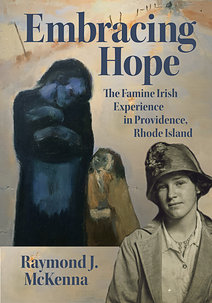
 Embracing Hope: The Famine Irish Experience in Providence, Rhode Island
Raymond J. McKenna
Embracing Hope tells the story of the Irish farmers and laborers who, in the wake of the Great Hunger, made their home in the Ocean State. It is the humble folks, the day laborers, the domestic servants, the unwed mothers, the abandoned children, whose lives reflect the damage and heartbreak that hunger and disease brought to these otherwise optimistic people.
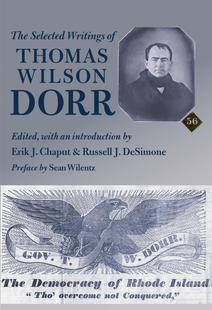 The Selected Writings of Thomas Wilson Dorr
Erik J. Chaput and Russell J. DeSimone
The Selected Writings of Thomas Wilson Dorr offers a perspective on the dramatic politics connected to the 1842 Dorr Rebellion. Editors Erik J. Chaput and Russell J. DeSimone bring to life Thomas Dorr’s political career before and after the rebellion that bears his name. Long-time collaborators on public history projects, Chaput and DeSimone explore the shifting politics of the people’s sovereignty, especially the intersection with slavery and race, as the ideology moved from the margins to the center of public discourse in the 1840s and 1850s. The editors provide a lucid introduction to Dorr’s career and frame the individual selections, which come from a multitude of archival sources, with informative headnotes.
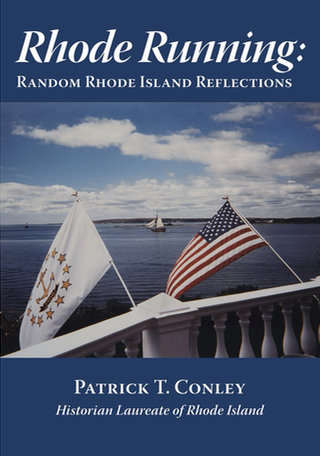 Rhode Running: Random Rhode Island Reflections
Patrick T. Conley
In his fifth anthology of essays, noted Rhode Islander Patrick T. Conley highlights his Irish-American heritage and a happy reunion with alma mater, La Salle Academy. Dozens of essays showcase Conley’s acumen as a historian of his native state and the sting of his wit on such subjects as woke culture, historical statues, top-flight athletes and sports promoters, patriotism, our country’s misguided wars, Rhode Island’s Black leaders and prominent women, not to mention the political advice he gave to President Donald Trump that he quickly accepted.
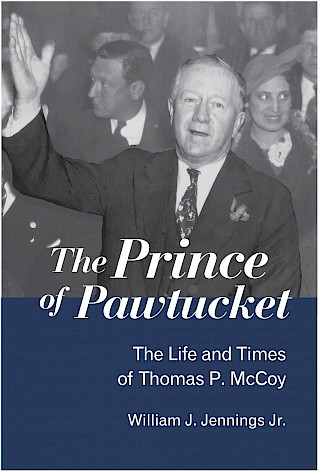 The Prince of Pawtucket: The Life and Times of Thomas P. McCoy
William J. Jennings Jr.
In in his 1986 doctoral dissertation, William Jennings gave Thomas McCoy the title of “Prince of Pawtucket.” In this new book on the legendary mayor of Pawtucket, Jennings gives us a vivid picture of the politics of that city in the 1920s through the 1940s that shows why McCoy was so deserving of this sobriquet.
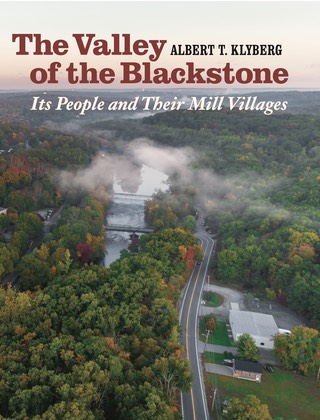 The Valley of the Blackstone: Its People and Their Mill Villages
Albert Klyberg
The Blackstone River powered America’s entry into the Age of Industry. The success of Samuel Slater’s cotton spinning mill in Pawtucket, Rhode Island in 1791 touched off a chain reaction that changed how people worked and where they lived. Between Worcester, Massachusetts and Providence, Rhode Island are numerous mill towns and villages whose centuries-old history is now told in great detail by the late Al Klyberg, former executive director of the Rhode Island Historical Society, and resident of the Valley. Mr. Klyberg played a leading role in the 1986 creation of the Blackstone River Valley Heritage Corridor between Providence and Worcester to encourage historical preservation and tourism in that region and, with close friend Dr. Robert Billington and others, he persisted in designating certain sites within that valley a formal unit of the National Park System. That project was completed on December 19, 2014, just two years before Al’s sudden death on January 10, 2017.
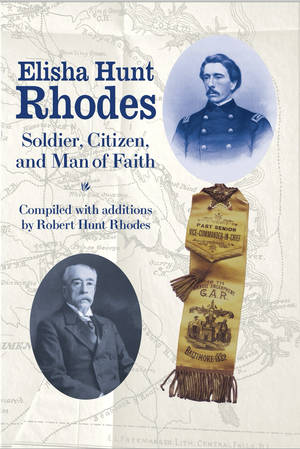 Elisha Hunt Rhodes: Soldier, Citizen, and Man of Faith
Robert Hunt Rhodes
Elisha Hunt Rhodes: Soldier, Citizen, and Man of Faith gives an account of Elisha’s life and continues his story in his own words taken from journals, speeches and memoirs. It shows him as a natural writer whose decency and humor shine through even the darkness of war. Gripping accounts of battle add to what we know from his diary, published as All for the Union, which was highlighted in Ken Burns’s The Civil War documentary. His devotion to his faith and comrades stand out as clearly as his heroism. Elisha Rhodes was a man of his time who responded to the call of duty and service in war and peace.
This title will be available the first week in November.
 Rhode Island Election Tickets: A Survey of Eighteenth- and Nineteenth-century Paper Ballots
Russell J. DeSimone
Rhode Island is said to be the first colony of the original thirteen colonies to use paper ballots to elect its political leaders. The earliest known Rhode Island paper ballot dates to 1743/1744. Rhode Island by virtue of its liberal colonial charter granted by King Charles II in 1663 has been electing its governors and other representatives since then. Paper ballots were used extensively throughout the eighteenth and nineteenth centuries and numerous examples survive to this day. Rhode Island Election Tickets: A Survey of Eighteenth- and Nineteenth-century Paper Ballots provides the reader with an in‐depth look at democracy at work. Shown are presidential elector ballots with the first four electors for Thomas Jefferson for president in the contentious election of 1800; statewide tickets for governor, lieutenant governor, attorney general, treasurer, and secretary of state; ballots for representatives to the United States House of Representatives; local elections for senators and representatives to the state general assembly; and special elections including amendments to the state constitution. A comprehensive introductory discussion by Rhode Island Historian Laureate, Dr. Patrick T. Conley, provides an overview of Rhode Island’s electoral history.
 The State of Rhode Island: Politics and Government
Maureen Moakley & Emily Lynch
Over the past twenty years, the politics and the political culture of Rhode Island have changed significantly, and this book is designed to provide a comprehensive update on the always fascinating story of politics and government in the Ocean State. The authors recount the multiple factors that have strengthened our commitment to more efficiency, equity, and transparency as politics continue to shift in ways that appear to be less individualistic and more collaborative. It also casts a critical eye on the myriad challenges ahead. Scholars and experts at universities and organizations across the Ocean State provide an engaging analysis of the current issues in a series of chapters and essays about the political institutions, public policy, and political behavior in Rhode Island. The State of Rhode Island: Politics and Government is meant for a wide audience, including students, political actors, and interested general readers in this tiny state with big possibilities.
 Revolutionary War Defenses in Rhode Island
John K. Robertson, PhD.
“Colonel John Robertson has done it again. In his first Rhode Island Publications Society volume, Robertson transcribed hundreds of pages from the Proceedings of the Rhode Island Council of War during the American Revolution. With this massive second volume, Robertson catalogs the numerous forts and redoubts that dotted America’s smallest state. The Siege of Newport and the Battle of Rhode Island both took place on this landscape in August 1778. The Colonel presents dozens of sites that show this 20-day campaign to be the largest martial encounter in the history of New England. What we might today call a “multi-cultural” campaign involved many diverse groups: the American Army and Navy; the famous Black and Native American Rhode Island Battalion; the French Army and Navy; and the British Army and Navy with their hundreds of German Hessians and Irish troops. While assigned to war-torn Rhode Island, all these groups contributed to the rich archeology that Colonel Robertson has documented and described in this expansive reference work.”
— John J. Parrillo, Ph.D., Salve Regina University
The book covers American, British and French fortifications within the state and includes almost 300 maps and plans including 9 period maps in color.
 Island Girl: The Life of Justice Florence Kerins Murray; Patriot, Public Servant, Esteemed Jurist
Marian Mathison Desrosiers
In her youth Florence Kerins Murray (1916–2004) saw the expansion of women’s suffrage rights, a world-wide depression, and war. She served the nation in the Women’s Army Corps and became a respected military officer during World War II. After the war Murray ran for the school committee and the state senate; in those positions she demonstrated her energy and abilities, as she did in her next jobs as Rhode Island trial court judge and supreme court judge. For more than forty years she made decisions on constitutional rights of citizens of Rhode Island and provided leadership in jurist organizations at the national level.
 The Fabre Line Club: Providence’s Cultural Camelot, 2007–2013
Patrick T. Conley
For a few brief shining years in the early part of this millenium, Dr. Patrick T. Conley’s “Camelot” on Allens Avenue in Providence hosted a Rectangular Table of historians, literati, and ordinary bedrock citizens of the Ocean State. Dubbed “The Fabre Line Club” in commemoration of the immigrants who debarked Fabre Line ships onto the Allens Avenue docks, the club presented lectures, cultural events, and entertainments both edifying and amusing to audiences from all walks of life — not to mention ethnic heritage buffets and dinners with a view of the harbor. Like Arthur’s court, the Fabre Line Club also vanished into legend, but lives on in this joyous and melancholy saga of seven years of culture, politics, and good times on the waterfront.
 A Historical Cruise Through the Ocean State
Dr. Patrick T. Conley
Patrick Conley’s thirty-first book and his fourth anthology of Rhode Island historical essays analyzes, like his previous collections, a diversity of Rhode Island topics. Most useful to the student of Rhode Island history are the three introductory essays. The first is a lengthy survey of the state’s history written for its 350th anniversary in 1986; the second describes in detail the factors that dramatically transformed Rhode Island from a Republican to a Democratic state (1920–1940); and the third is a local morale booster outlining Rhode Island’s eight major contributions to the formation of the United States (1636–1791).
 “Fighting Bob” Quinn: Political Reformer and People’s Advocate
Russell J. DeSimone, Editor
“The term the “Roaring Twenties” applied to the social and cultural changes in America in that decade. It could have been used just as meaningfully to describe the political landscape in Rhode Island in that era. The period included intense political unrest, bruising ethnic and religious battles, state police and national guardsmen, a bromine bomb in the state legislature, a race track war, savage personal attacks, and anything else imaginable. At the controls in the center of this roaring “twister,” Robert Emmet Quinn, Democratic partisan, military veteran, governor, and noted jurist just barely controlled the tempest. These series of interviews by Matt Smith provide the optical funnel to peer into the complexities of a time that changed Rhode Island forever.”
— Dr. Scott Molloy, Professor Emeritus, URI Schmidt Labor Center
 Proceedings of the “Recess” Committee of the Rhode-Island General Assembly 1775–1776 and the Rhode-Island Council of War 1776–1782
John K. Robertson, PhD.
“Chronicling the violent years of the American Revolution, this massive manuscript deftly documents the intense resolve that the Rhode Island patriots displayed in fighting eight years for their independence. Colonel Robertson should be commended for unearthing this forgotten Rhode Island War Council book, a true treasure trove of governmental records that has been languishing in the RI State Archives for over two centuries.”
— John J. Parrillo, Ph.D., Salve Regina University
“An important addition to the history of Rhode Island during the American Revolution.”
— Gordon Wood, winner of the Pulitzer prize in History
 Mr. Providence College: The Selected Writings of Rev. Joseph L. Lennon, O.P.
Rev. Joseph L Lennon, O.P.
“After a careful reading of these essays, drawing as they do, upon the wisdom of a vast array of philosophers, theologians, scientist, poets, scholars, social critics, historians, jurists, statesmen, and literati, I have come to the belief that this volume could also be titled Father Lennon’s Mother Lode, because it is a goldmine of insights and contains rich veins of practical, intellectual, and spiritual guidelines for life, both here and hereafter.”
— Dr. Patrick T. Conley, Rhode Island Historian Laureate